
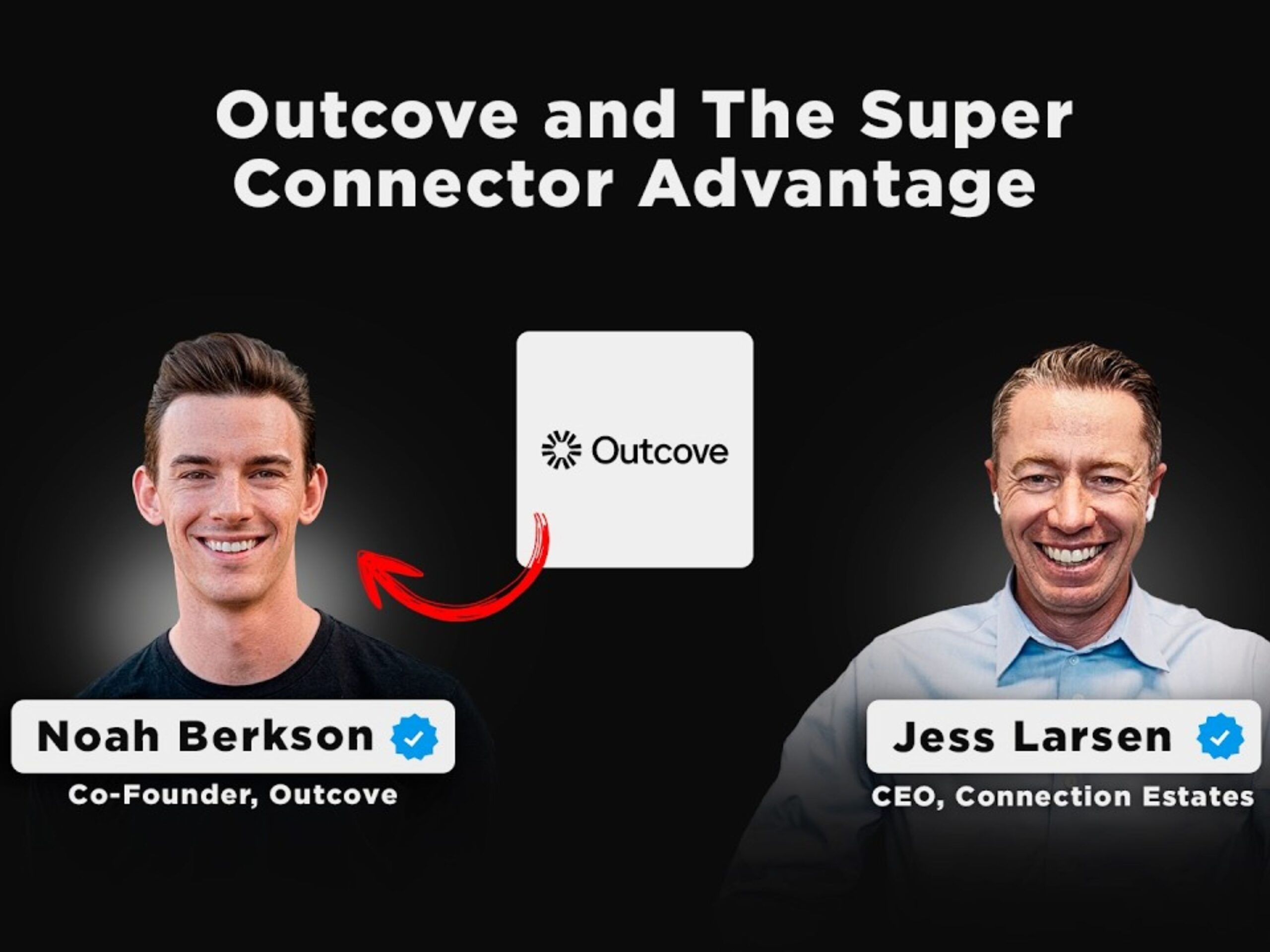
I recently had the pleasure of sitting down with Jess Larson on his show on Innovation & Leadership, and what started as a conversation about in-person events turned into one of the more wide-ranging discussions I’ve had in a while. We covered everything from my entrepreneurial journey and recent exit to why I believe the single most underrated business strategy today isn’t AI or automation. It’s relationships.
In this article I’ve summarized the key topics we covered. You can also find the link to the full episode and the complete transcript below.
Table of Contents
Topics We Covered
Jess and I went deep on what it actually takes to build a network that opens doors rather than one that just looks good on paper. A few of the themes we kept coming back to:
- Building and exiting companies across unexpected industries — from a 340B health tech platform and a Latin American software staffing firm to a farmland leasing marketplace, and what I’ve learned about timing, relationships, and knowing when to sell
- Why in-person events have become more valuable, not less — what made early conferences transformational, why most events have lost that magic, and how Jess Ma and I launched Outcove to bring it back
- The art of non-transactional connection — why leading with generosity, asking great questions, and making introductions without keeping score has been the foundation of almost every meaningful opportunity in my life
- Rookie mistakes in high-trust rooms — pitching too fast, talking too much, and asking for introductions before building any goodwill, and what to do instead
Watch Now
Watch the full conversation below, or click here to watch on YouTube.
Full Transcript
Jess Larson: Welcome to the Jess Larson show on innovation and leadership on this episode. Back with my good friend Noah Berkson. Noah, thanks for making time.
Noah Berkson: Thank you so much for having me, Jess.
Jess Larson: So I really want to talk about something you and I talk about all the time, which is like the power of in person events and how like one to one relationships are like more powerful. I think we all got zoomed out too much on Covid and you’re kind of like a master super connector. So I really want to get our audience to understand like why this has worked so well for you and but for folks who didn’t catch your previous episode, can you give us a background on you, kind of some of the big business highlights, including your recent exit. And then we’ll talk a little bit about your co founder and then I want to talk, I want to jump into outcove.
Noah Berkson: Well, first off, thanks for having me and I think getting, getting called a super connector from you is probably the highest honor there is because I don’t know anyone that’s at the, at the velocity you are with connecting people and bringing people together. But yeah, I grew up in the Midwest. Terrible, terrible student, barely, you know, graduated high school, barely got into college, talked my way in, had terrible adhd. You probably still notice a little bit of that today. But got really lucky, ended up starting a company in college. I realized that when I could focus on something, I was quite good at it when I could put all of my energy into something and I was really stimulated by it. And have started a lot of companies, definitely not all successful, have just sold the fourth about a week ago, which is really exciting, I think. I tell people it’s just a power law game. You kind of take enough swings and you get lucky sometimes. So that’s kind of, that’s been my, that’s been my mentality. And tell us about this, Ben.
Jess Larson: Tell us about the company. Well, what are the first three companies you sold? And then let’s go a little deeper into the last one.
Noah Berkson: Yeah. So we had a health tech business in the 340v space, which is a 340v is a federal drug discount program in the US and built a point of care solution for hospitals, health systems, federally qualified health clinics that would facilitate this program. So virtually helping patients who are uninsured or underinsured get better priced drugs. And then also the entities that care for those patients make money directly from the drug manufacturers. And so we sold that to a private equity roll up. Had a software staffing business that I sold in 2021.
Jess Larson: Just quickly. How old were you when you sold your first one?
Noah Berkson: Well, we actually, we sold that, like, to about two years ago, a little less than two years ago now. So that wasn’t an early exit, but something that was started a long time ago and then had a software staffing business called Dev Base. We employed hundreds of software engineers in South America, Latin America, Asia, and we would staff them to companies mostly in the US a little bit of Europe, which we sold in 21 to a core banking provider. So a company that provides software to banks, infrastructure to banks. Think of it as like a modern fis, Pfizer, Jack Henry, or some of the large players in the space that people would know had a. Had a venture fund and studio called Kander Ventures that we ended up selling in early 2022 and just sold a farmland marketplace. So we were the largest farmland leasing marketplace. Think of us like ebay for ebay for leasing farm ground. A lot of people don’t know about half of all farm ground in the US Is leased, so it’s not farmed by the owner. So we were a market maker and facilitated those transactions. And that’s a whole other whole other industry that is super interesting for a lot of reasons. But, you know, you’re trying to bring a business.
Jess Larson: Yeah, your average business that your typical young guy in Orange county owns.
Noah Berkson: That’s exactly right. That’s exactly right.
Jess Larson: How did you end up in Farmland leasing?
Noah Berkson: Actually meeting somebody that had an idea in the space. I grew up in Iowa, so I grew up around farming. So I knew, you know, I knew a bit about it. I would say I was by no means an expert in it, but, you know, grew up in one of the largest ag states that there is. So I had a lot of familiarity. And like everything else, I think I like to find things kind of my philosophy and philosophy is maybe a little bit generous, but kind of the way that I’ve fallen into things or found opportunities is finding things that from the outside look like they could be done differently in industries that I don’t know enough about to understand why they wouldn’t be done that way. Right. So being able to say, hey, that seems like you should be able to do this differently. Farmland should be leased online. Why is it not? You know, why is it leased in person? And why is your network determine who you can get to farm your ground? And you see that from the outside and go, oh, well, seems like easy. You just start a marketplace and, you know, people. Landowners put up land, farmers bid on it. Simple. But you don’t know that that industry has not changed for a very, very, very long time and has been very averse to technology. The average landowner in the US is in their mid-70s, the average farmer in their late 60s. And so you don’t know enough to understand why that doesn’t operate that way. But then you’re in it and you start something and now the only way through is through. And yeah, that works occasionally.
Jess Larson: Yeah. So how many years were you in that business?
Noah Berkson: Since 20. 20.
Jess Larson: Okay.
Noah Berkson: Yeah. A little over five years.
Jess Larson: A little over five years. What’s one of your takeaways?
Noah Berkson: We technically started in 2019. Takeaways for the future. I think I was also getting into businesses many times where I had to sell, I had to educate people. So I was bringing some solution to the market where you had to educate people. Educate people not only about the problem, but then about the solution. And I learned that that was very hard. Educating people is not a fun thing to do. It’s time intensive and it’s very expensive. And so I think what I learned from that is moving forward, I want to focus on things where I am, where people are buying a product that I have, I am not selling it. So it is already something they know that they need, they understand it and I can just provide the better, cheaper, faster solution to that. I think that was, that was probably my, that was probably one of my biggest takeaways. But also that, you know, when you, when you have a will in something and you want to change something, you can make it happen. It’s, you know, it’s by no means, by no means easy, but you just kind of go through it and through it and through it. The amount of times in that business where we thought everything was not going to work and we weren’t, you know, we weren’t going to be successful. I mean, that was, that was a daily feeling for the last five years. And it’s cool, it’s cool to see it turn out the way that it did.
Jess Larson: Yeah, it’s interesting. I do think about that for our, you know, for our company, you know, luxury vacation home co ownership business. We regularly get offered places that look beautiful. People like, oh, yeah, you know, you know, maybe we could do that with, with my, you know, home number five, right. And it’s like beautiful, it’s on some lake or something. But I’m like, I don’t, you know, stunning place. But I’m looking for places where I don’t have to explain where it is when I say we’re doing something you know, in the Caribbean, on the, you know, beachfront in the Cayman Islands, or we’re doing Hawaii or we’re doing Aspen. Not, none of the ultra high net worth people are like, where’s that? Right?
Noah Berkson: It’s, yes. And I think it is just so important and I think even, you know, it’s an interesting time right now because with this, I don’t know, this AI shift or revolution or boom or whatever you want to call it, there’s a lot of new technology that is, you have to educate people on it. And educating people is hard, but the vast majority, I think of businesses are going to be educational businesses from, from how you sell your product standpoint, which, it’s just hard. It’s just hard. So I, you know, I wish, I wish everybody well doing that. And honestly, a lot of those people, that’s where the most opportunity and the most money is, I think in solving those problems that, you know, you have to educate people on. But it’s also, you’re, you’re picking the most uphill road, you know, pushing a boulder up the biggest hill.
Jess Larson: Well, maybe one last question before we move on this. You know, I think about my friends in private equity or people who come on the show and you know, they’re saying, oh, we’re, we’re doing a big roll up in this industry or whatever. So far have not heard someone say, like, man, if I could just find a farmland business. Okay, so when, when it comes to getting the number you’re happy with, you know, on this exit, what’s, what’s a thought, what’s a principle? When, when you’re talking to entrepreneurs who might be listening today who are, you know, it’s clear that, you know, they’ve built something to the point where it should be able to attract the kind of number they’re looking for. And now they need to run a process or now they need to start, you know, maybe talking to some strategic buyers, talk to some financial buyers. What’s a principle or lesson?
Noah Berkson: That’s a good question. That’s a great question. I think I have a few thoughts on this one. I think timing is everything. And I see this time and time again with friends of mine that have built businesses, they’ve built incredible businesses. And today they go, if I would have sold my company five years ago, I would have made more money than I’m going to today. Right? Because industries change, multiples change, things get commoditized, A lot of people come into the market and so understanding when, like, when is a good outcome for you. And I think it goes against most venture capital because venture right would say, hey, we need these, we need a huge return or we’re not really interested in this business. And so as a founder, they go, you’re going to keep pushing and pushing and pushing. And I’d rather it be a 0 than be like a 1/2 right compared to the thing that, the outcome that I want. And so I think it puts a lot of people who take venture money and don’t really realize what they’re signing up for ahead of time. Um, it can put you in a really precarious situation because you’re forced to keep going. But the industry may be changing there. I, I see so many people in this situation that are there right now. They’re like, if I would have sold my business years ago, I would have made way more money than I will today. And that’s really hard. It’s really hard to see that as a founder to say, wow, like I should, I should have, you know, I should have done this. I think also talking to people ahead of time and building relationships, I think most transactions are relationship driven. And yes, of course you have some companies that, hey, we need to buy this because it is so strategic that we need this company or it’s a cash flow asset, which most startup companies are not cash flow, they’re not cash generating machines, they’re money losing machines. A lot of those are all going to be relationships. And so I think building those relationships early is really important. Some people go, well, I don’t want to talk to anyone. I don’t want them to know that I might sell in the future. I want to keep all the cards close. It’s kind of like, you know, founders who will, who will email us for investment and they’ll say, hey, can you sign an NDA to look at our, to look at the business? And it’s like you just don’t really understand how this works. I think those are two really, really important things.
Jess Larson: Yeah, no, I totally agree. I mean that’s very much. I think it’s one of the things you and I agree the most on. And when you say we in that sentence, do you want to talk about like who you’re investing with these days and how you’re allocating capital?
Noah Berkson: Yeah. Today, from the family office perspective or Austin capital perspective, we invest in predominantly fintech and financial service businesses. One of the things that we invest in are community banks. And so probably highest up on the list are community banks, which are like the most non venture type of business. Like an old boring business that we think we can bring. You know, we, we have a, we have technology that powers banks. And so we want to invest in banks, we want to then help equip them to run more efficiently, gain more customers, make more money. So we think that’s a really good investment for us. Outside of that, we’re looking for things that are additive to the, additive to the companies that we own today. So we have a core banking business, we have a payments infrastructure company, we own a trust bank, we own a high risk bank. So we want things that can fit into that. One of the things I think that might be challenged a little bit today, like my answer today is a little different than it might have been a year ago is typically when we’re investing, especially in the fintech space is what we’re looking for is distribution. You have lots of people that come to you and go, oh, look at this technology, technology, technology we’ve built. And what you realize in that industry, if you’ve been in it long enough and if you know it, is that everyone is using all the same technology, right? You’re still running on the payment rails, you’re still running on all of this other people’s technology. So there’s not much advantage or IP around technology. It’s distribution, which is interesting because most people don’t realize that. So when they’re pitching, they’re pitching. Here’s this technology we’ve built, technology, ip, whatever that is. It’s not. Here’s the really unique distribution angle we have because that’s the thing I think that will win not only now, but also in the future. Distribution will be everything, especially as technology gets easier to build. And you know, I can spin up a Neo bank which used to take, you know, years and millions of dollars for, you know, probably not single digits, but, you know, tens of thousands of dollars.
Jess Larson: Yeah. Yeah, I love it. Well, speaking of relationships, let’s talk about your co founder, Jess Ma of Altcove, who has also been on the show for you, who missed that episode. Can you give folks a quick background on her?
Noah Berkson: Yeah, Jess is awesome, is a super close friend. I actually met her because of a podcast, which is a whole other story, which is cool, but we met through this podcast. We’re both in YPO and we’re doing some similar things, but she’s also been a serial entrepreneur, has built a bunch of companies, runs a venture studio today, has been in fintech and bio and litigation tech. Probably a much, much more vast, vast amount of industries than, than I Have, but just as a. Is a force of nature. It’s just someone that immediately when you meet, you go, that’s, that’s a person I want in my life. And that person can just run, run through walls to get things done.
Jess Larson: Yeah, I think when she was on the show, she said the combined value of the 10 companies is like a billion and a half.
Noah Berkson: It’s incredible. Yes, very, very much so.
Jess Larson: So where did the two of you come up with this idea for your outcome events?
Noah Berkson: Yeah, you know, we both, I think we’re both very big relationship people. As in like we, we love meeting people, we love connecting people, but at the core is actually building relationships. It’s not a, it’s not a transactional nature of meeting people. It’s not, I’m meeting you because I need this. Um, it’s a, you know, even today I probably spend 15 hours a week meeting people with no agenda. Just you guys should meet. Right? It’s not because I want to sell you something. It’s not because I want to get something out of you. It’s just like I want to, I want to bring great people into my orbit because I, you know, I find that that allows me to bring more great people into my orbit and creates, you know, creates just a lot more cool life experiences and deep relationships and opportunity at times too. But I think that’s just not the, that’s not the main function. And we had been talking about this one day about how we go to all these events and I think about the best conferences that I’ve ever been to or heard about. And in the beginning they were really small, right? They were super intimate. Everyone there was very vetted. It was non transactional. You were having real conversations, you’re walking away with real friendships and you leave from that changed in some way. You’ve learned new things. You have people that you’re going to incorporate into your life. And that was incredible. And then those things get popular and then they turn into businesses, right? And then it goes away from like, how do we create all this value for this small intimate group to how many people can we get to this event? How can we scale this? Right? And how do we make a bunch of money doing it and we hire a big team and I mean, you know how this goes. And we were, yeah, we were just kind of a little frustrated with the things that we were going to and saying either they’ve become too big and commercialized or most of the people are there to sell people something. Right? You go to a conference and you’re paying a bunch of money to be there. Well, you better, you know, you better get your money’s worth, right? You better like sell the thing that you’re there to sell. And we were just complaining about this and just like, well, why don’t we just like host something? Like why don’t we just host our own thing where we bring together a super small curated group of people and we really focus it on relationships and getting to know people. It’s like, how do you go make adult friends? I know that sounds like silly on the surface, but I think that’s everything. I think adults and I think especially as people get more successful, what I see is they tend to get more secluded and, and more isolated and they kind of get the group that they spend time with and that is the group. And I think that’s just such a miss in life when you’re not bringing in the new people in, getting the new perspectives, doing the new things. One of my, one of my best friends, one of my best friends has this, has this older friend, maybe we’d call him like a mentor, he’s in his mid-70s and he said to my friend Tony, he’s like, Tony, like if I have one piece of wisdom for you or advice, hang out with younger people, make friends with younger people, significantly younger than you. It sounds like weird, like that’s the life advice that you have for me. And he said, because otherwise you get stuck with all the same people and you’re talking about the same things and like your worldview isn’t changing, you’re not doing the active stuff, you’re not getting the new life experiences anymore. And I mean that really resonated with me. So anyway, that was kind of the precipice of this. And also how do you bring together people that are not going to cross paths in their day to day life, Right? So how do you find people that? Because I think for me personally some of the biggest, let’s say unlocks in my life have been from conversations with people that are not in my industry that honestly can’t even relate to a lot of the stuff that I do. But they open up some new worldview for me, some learning something that changes my life. And I think that’s where the magic happens. And so this idea is like, how do we create these intimate conferences, bring together founders, bring together investors, bring together family, offices, award winning musicians, scientists, politicians in this room? Because I think that’s where the magic happens. And I think it’s like, how do you stay small Enough to be meaningful, but, like, diverse enough to have these breakthroughs and breakthrough relationships that can change people’s lives.
Jess Larson: Yeah, you know, there’s some science that backs up your opinion. Do you know the book Where Good Ideas Come from by Steven Johnson?
Noah Berkson: I do not.
Jess Larson: It’s fascinating. He has a great TED talk, an Even better, probably RSA Talk, Royal Society for the Arts, whether he’d be like a whiteboard animation while he’s talking. Right. But I listened to that book a few times.
Noah Berkson: I’m a huge fan.
Jess Larson: And he basically just went through the physical locations where innovation happened over the years. And so he’s like, you know, the coffee houses with the Enlightenment, you know, in Europe, or, like, you know, even just like, the East Village during, like, Bob Dylan’s time for music when, like, so much happened there. He just goes through, like, where did, like, physically, where did these innovations come from? And, you know, to be like, oh, this building in MIT has had so many more innovative breakthroughs come out than all the other buildings. Like, just is these unique stories, right? And what they find is, it’s like most of these stories, whether it’s Tim Berners Lee coming up with the World Wide Web, or just all these stories, it’s like they work on this hunch that they’ve got. Then they go out and bump into, like, he calls it a liquid network. Like, go out and bump into ideas that are completely different than yours. Like my favorite author, Richard Koch, the 8020 principle guy, the billionaire who wrote the 8020 principle and came on the podcast, he calls it go bump into ideas from the distant part of the solar system. That’s what he calls it. Okay, but in the Steven Johnson book, he’s like. He goes through. He’s like, they go out and they bump into all these other ideas, Then they go back on their own in solitude and work on their idea. And then they go out and they bump into all these other people. Then they go back in solitude, and it’s like they get basically halfway done by doing that. And then all of a sudden, they meet the other half of their idea. They meet the right person, they, whatever. And it’s like, it takes, like, 99% of the time to get halfway done and 1% to get the second half done. And so, like, what you’re saying is, like, history proves that, right? The people who made huge leaps, how, yes, they’re working crazy hard, but they’re also out there bumping into concepts, getting out of the group. Think of their industry, of their science, of their group, whatever. It is. And then so, nays, obviously I’m a fan of your approach and I loved the Park City event last year. I’m so sad I missed Hawaii. I’m super stoked for Park City. By the way, anybody listening to this in the beginning of 2026, you can probably still apply. Do you have any spots for people to apply for the, for the march one?
Noah Berkson: We do have a few spots for the march one and I’ll ping that also in the show notes so that you have it.
Jess Larson: Yeah. Is there a website or where do people go for that?
Noah Berkson: Outcove.org that’s right.
Jess Larson: Okay. So, yeah, I’m going. Noah’s nice enough to have me host a panel with our charity Child Rescue Association. I’m going to be hosting a panel of some people I really respect, Dean Stott and, and some other folks talking about making a dent in helping children. What were you going to say, though?
Noah Berkson: I was going to say just, I just want to, if anything I can impress upon people is just like, the one relationship can change your life. I think about that. There’s this exercise that I’ve, I’ve now done a number of times as I’ve updated it, but I go, how do you like spider web your life? And what I mean by that is let’s take every big thing that’s happened in your life and how did you get there? And it’s like, who was the person that you met that then introduced you to that opportunity or that person that introduced you to that? And it’s like becomes a spider web. And the fascinating thing for me is almost every one of every one of the opportunities that things led to that were very, let’s say, like life changing Net positive for my life. They did not come from the people I would have expected. They didn’t come from the people that were in the same industry as me. They didn’t come from the people that I, you know, see every day and talk to and would run into at the events I’m going to. They came from very random people. And I think that is just like, it’s, it’s a fun exercise to do one. So I encourage people to do it. But I think that’s just how I, how I think about everything. And it’s like, let’s keep. I want to just, I want to be going and saying yes to things because you never know when that happens. And people get, I think people can quickly get discouraged. You go to one conference and you’re like, well, I didn’t make that. You know, I didn’t get that life changing relationship from this thing. And it’s like, yeah, of course not. That would be incredibly lucky if you did. But the odds every single time of you doing that, like you are, you are going to have those things happen.
Jess Larson: Yeah. So let’s talk about this more. Let’s start with the opposite actually. Let’s talk about rookie mistakes. When you see folks who, they finally make it into a room like, you know, at Alcove, you’ve got, you’ve got young people who are, you’ve got young billionaires there, you’ve got artists there, you’ve got a very eclectic and very like accomplished group that you gather. Hence the reason I’m excited to come hang out with you next week. But talk to me about rookie mistakes of like the person who shows up and you know, it’s trying to get every single person’s phone number but not actually building a real connection. Or talk about rookie mistakes for in person events when you’re with a bunch of high profile.
Noah Berkson: Yeah, yeah, I think, let’s see a lot of them, I think that, I mean the easy ones are like pitching first, right? Is the people that come and just pitch right away, they’re like, here’s the thing I’m doing and how do I get you involved with it? And then when you’re, you know, if you’re not interested in, okay, great, I’m going to go on to the next relationship. So it’s like being in a place without the mindset of I’m here to build relationships and that’s what I’m here to do and not like I’m here to sell somebody something. A lot of times I also see people just talk a lot and the conversation when they meet people is how do I talk as much as possible and impress upon them like how impressive I am or how successful I am. And so many times I watch this, just like I see this and I know exactly, I see one person doing this and like, let’s say I’m in a group of three people. Someone comes up, they’re talking to the other person and I know exactly how that other per. The person is feeling that is getting this like listening to them and they kind of keep glancing over like, how do I get out of this conversation? People just don’t listen. Everyone, like the people do not want to listen. It’s just this instinctual thing to be like, oh, how do I kind of puff my chest out and be the, be the, be the successful. Interesting. Here’s why you Want to talk to me? Like, my, My. My anecdote for this was, I was at a conference. I was at a conference years ago, but there was someone there that I’d really wanted to meet. And, like, I just seen. I. You know, I followed their career, and I wanted to meet them. And I ended up getting a chance to. To chat with them. And we end up chatting for, like, 45 minutes. Long conversation. You know, I assume it’s going to be a short thing, ends up being a long conversation. And at the end of it, he’s like, noah, this is one of the best conversations that I’ve had in a long time. I just want to thank you. This is unexpected and awesome, and my ego is so stroked. I’m walking away with my head held high. And I was thinking about it afterwards, and I said, he doesn’t know anything about me. I just asked this guy questions, and he just talked about himself the whole time. And he goes, this is the best conversation I’ve had. And I’m like, you don’t know literally anything about me.
Jess Larson: That is straight out of how to Win Friends and Influence People. You know, that book is 100 years old, and it’s still solid gold. I always think it’s funny when, like, Harvard types or people want to, like, treat that book like it’s below, beneath them. And I’m like, well, let me tell you about, like, the FBI hostage negotiators who come on the show. Let me tell you about, like, the CIA case officers and, like, the people, like, the salespeople who have sold, like, sold hundreds of millions of dollars of their stuff. And why all those people swear by that book. So, you know, like, maybe you ought to go back to that one. And it’s kind of like that you can make more friends in two weeks by being interested in others than you can in two months by trying to get them interested in you, right? Or it’s like. Like Jim Collins, you know, any good to great when he says that, like, that his advisor said, you spent so much time trying to be interesting. I think you’ll do better by trying to spend time being interested.
Noah Berkson: That is a perfect, perfect summation of that. And one of the other things is just people not understanding, not leading with giving first and giving value. I think there’s a big misconception, and especially when you’re younger in your career, you go, well, if I’m talking to Jess Larson, how do I. How am I valuable to him? Like, he’s been really successful. He’s doing all these cool Things like, I haven’t done all that stuff yet. Like, how do I be valuable? And people don’t even really think that. They think. Let me just ask him for things. Let me ask Jess for this and for this and for this, thinking that you’re just going to. You’re just going to be like, oh, yeah, of course. Let me just do everything I can to help you and open up my network to you when you’re not doing anything in return.
Jess Larson: Yes. Yes. That’s like my favorite saying. The best way to get. The best way to get a referral is to give five referrals first, Right?
Noah Berkson: Yes.
Jess Larson: And, like, I think one of my favorite stories on that. Do you know who Joe Polish is?
Noah Berkson: Runs the Genius Network. Does that name ring a bell? I don’t. No.
Jess Larson: Doesn’t matter. So he talks about this story. He, like, is the. My hero for this. He talks about this story, like, paid some money to go to Richard Branson’s island to meet Richard Branson. You know, a lot of people have gone to Necker, right? And he’s like, there’s a whole room full of people that wanted Richard Branson’s number. Okay? And people are doing what you said. They’re trying to impress him, and they’re doing a lot of the talking, whatever. And what does Joe do? He goes up and says. He’s like, just thinking, what’s in it for them? Right? And he’s like, actually, Joe Polish wrote a book called what’s In it for them? But he goes up to Richard, he’s like, hey, listen, big fan, blah, blah, blah. But listen, your charity sounds really amazing. I would love to know if you’d like any help fundraising for your charity. At which point Richard Branson says, that’s so generous of you. Let me give you my number. I want to stay in touch. Let me put you with your staff. And then he went back and actually did deliver. And he used his reputation. You know, it’s like, what does Richard Branson need from us? Well, he actually knows Richard Branson, knows a lot of people, but he. He doesn’t know everybody. And so Joe used his. Some of his own social capital up. You know, obviously, Joe is like the. In the pecking hierarchy. He’s way, way, way down on this list. But he still. He used his time, his connections, his social street cred to raise money for Richard Branson’s charity. As a result, he, like, has hung out with him, like, once a year for a decade. And they, like, actually became friends. And like you said, showing up and serving especially to people who usually are getting hit up. You definitely stand apart, right?
Noah Berkson: I. I built my. I mean, I would be nowhere today without that. But, like, the early example of. Of that is I would. When I was in college, right? So I was probably, like, 19 years old. I wanted to. I wanted to get business. I started a company, and I was trying to get business. And what I did is I went and wrote all of these CEOs of large companies. And I would say something to the. And I was like, this is like LinkedIn or cold email. And I’d say something to the effect of like, hey, I’m a young. Like, I’m a young entrepreneur. You know, I’m in college at the time. Young entrepreneur. I’ve really liked. You know, I’ve followed your career. I found this, like, really cool. I would love to buy you a coffee and just hear about your experience, like, hear your story. And shockingly, like, Everybody. Not, say 100% of people, but. But a huge amount of them were like, oh, of course. Like, everyone that’s writing me is like, I want this from you. I want this from you. Can you buy this product? Can you do this? Can you introduce me to this person? I was like, I just want to hear your story. And I would go and I would ask questions, and I would make sure I bought the. You know, I’d make sure I bought the coffee when I, you know, had no money. But, like, let me. Let me make sure. Just don’t order, like, a croissant, too. That might be pushing it, but. And I would go, just ask questions, and I’d be like, oh, how can I be helpful to you? How could I be helpful? At the time, I don’t even know how I could be helpful, but I asked the question anyway. And they’d be like, oh, that’s so kind. Like, oh, I’m working on this, or whatever it would be. And then they’d go, how can I help you? And I’d be like, oh, no, this was it. This was incredibly helpful to me, like, learning from your journey. And people would be dumbfounded because they’re like, this kid came to buy me a coffee and asked how he could help me, and now I can’t help him. And then these people are like, how can I help you? Right? I’d start to try and make some introductions because I was meeting other CEOs. I’m like, oh, you got to meet this other guy, right? And so the perceived value of me was really high. And they go, well, wait, what can I do for you. And I’m like, oh, nothing. And that they would just, like, they’d, they’d want to do something so badly, they’d be like frustrated about it. Like, you can’t be giving all this value to me. This feels lopsided. Yeah. Just really, really funny thinking back on that.
Jess Larson: It’s how you stand out. It’s how you get cut through.
Noah Berkson: Right.
Jess Larson: It’s how you get cut through with in demand. People is give, don’t ask. And in fact, you know, like when they’re, when they’re asking. Yeah. Anyways, I love your story. Don’t need to repeat it.
Noah Berkson: Well, you know, one of the. Oh, sorry, I was just gonna say one of the, one of the things, One of the things I think people also don’t realize is like when you ask for an introduction, when I introduce you to somebody, that is my entire reputation on the line, right? Because I have like with my network right now and this, I’ve worked my entire life to have this. I’m like, there’s no opt in for me, right? So it’s like, I will introduce you to people that I know you will get along well with. I know will be valuable to you. I know you’ll be very thankful. Like, I’m not going to, I’m. I’m not gonna say, hey, do you mind if I introduce you to this person? I’m gonna introduce you to the right people at the right time. And I’m really good at that. So when I’m giving anyone an introduction, they don’t realize like the weight that that carries because they’re basically getting like a warm. Like you’re getting my entire life’s work right in that introduction. And there’s a lot of weight behind it. I think a lot of people don’t realize that. And so they’re asking for introductions. It’s like, oh, can you introduce me to this person? This person. And not providing any value or any reason to trust them. Like quite the opposite. Cause they’re just asking for all this value without, you know, without giving any. And I think that’s just a lot of people don’t realize kind of the enormity of that or the weight of that and, you know, something relevant.
Jess Larson: It’s short term thinking, long term thinking. Somebody short term thinking is going up and asking for an intro, asking for pit, you know, asking for money, asking for an intro, asking for, you know, can I borrow your credibility for myself? Short term, short term thinking, very low probability. People who are high profile are very good at dodging that. And oh, yeah, you know what? Here, let me, let me, let me hand you to my, you know, let me connect you with my CEO about that. Or let me connect you to my family office, you know, and they’ve got, they’re like, they’re very skilled at handing you off to their gatekeepers. Who, who are they going to tell you no versus the opposite. Like you said, show up, show up again, and then give some more. And like, and then give some more and then give some more. And it’s, it’s such a high probability way to start a friendship. And, you know, another one too is like, I think about a guy I really look up to in my 20s, you know, when I was CEO of my first investment fund, right? And our. We are a customer of kpmg. And they’re like, biz dev guy, this guy named. I feel so bad. I think it’s Jonathan Day. Okay? I remember his last name is Day. I can picture his face. And I remember, like, going to events and I’m like, younger than the other CEOs, by 15, 20 years, whatever, right? And he, every time he’d see me, he’d be like, his name is Chris Day. Every time I’d see him, Chris would be like, okay, what are you doing right now? What are you working on right now? And I started telling him and he was just like, stop, stop, stop. Okay, I’ve got somebody for you. And he grabbed me by the shoulder and walk me across the room and go introduce me to that person, right? Then he would brag about me to the other person so I didn’t have to talk about myself. He would say what he thinks we ought to talk about, and then he’d stay there for a minute for us to exchange. And then he’d slowly slip out and go to it again. And I promise, KPMG made so much money off that guy because he made me feel like a million bucks over and over. And is there anything better than not just, can I introduce somebody eventually? But you know those people at the parties who are like, they keep track of who everyone else is there, and they’re like, let me elect myself your assistant. And I’m going to go like, I’m going to walk you over someone right now who I just met 10 minutes ago. They’re almost like cataloging who’s in the party so they can do matchmaking. People love that person. That is such a great way to start a friendship, right?
Noah Berkson: That is the best person. And that’s also the hack for anybody that’s kind of getting into this world, right. Is show up early, start to meet people, and then just go introduce people at the same event. It can be a small event, but still in my mind I go, oh, Jess introduced me to that person. That was so, that was so kind of him. Even though, like, I may have run into that. I probably would have run into that person or talked to them throughout the night. But now I’m like, Jess is in my mind as my association between that person.
Jess Larson: Yeah. Especially if you’re trying to like break into an industry or you’re. You’re feeling insecure in a room or something. Right. Like introducing two high profile people to each other when you like, maybe you don’t think you’re even close to their level. That is, they really value it. Right?
Noah Berkson: They really value it. And something super relevant right now with all this. Have you, have you messed around with some of this open claw stuff? Has this been on your radar?
Jess Larson: I’ve just been watching social media talk about it. I don’t know anything about it.
Noah Berkson: So this is where my brain goes just on this relationship side. But one of the first things I did is I said, okay, after every call I have, I want you to grab like all of like a granola. I don’t know granola or whatever note taker you have. Fathom. But I want you to grab the transcript based on what the other person said. I want you to tell me everyone I should introduce them to that’s in my network based on all the email introductions I’ve sent, based on all the other conversations I’ve had and communications I’ve had. And it is wildly cool because I go, oh, you know, generally like you and I chat and there’s two. I go, oh, I get you’re doing this thing. Like I gotta introduce you to these two people or three people.
Jess Larson: Oh, you started the podcast.
Noah Berkson: I might be like half an hour
Jess Larson: late today because of doing that exact thing.
Noah Berkson: Cause we’re talking about it. But there might be 10 more people that would be really relevant that are just not top of mind this second. And I go, oh, if instead of giving you three introductions, I can give you like 10 introductions and I can do that with every single person I’m meeting if as long as they’re relevant and like the right things. Wow. Like, that’s really powerful. I can make, you know, essentially one more introductions a year. Yeah.
Jess Larson: I want to pause you and give you a compliment because I feel like you’re one of the best people I’ve ever met. For giving in a non transactional way. You set such an example for making super high level introductions and then not keeping track. It’s not like I did that so you’ll do this for me or I do that so you owe me or whatever. And it makes you like incredibly magnetic. No wonder everyone wants to come to your events. No matter I.
Noah Berkson: No wonder I want to come to
Jess Larson: your events is like that people can tell that, that genuine, the genuineness, that sincerity of like. No, this is really just like this is an act of service. This is not a sales technique. This is not what’s funny. It’s like probably one of the best things you could do for sales if you, if you need sales. But like this like, I can’t think of a better word than generosity of like, let me introduce you to your ideal customer. Let me introduce you to your ideal investor. Let me introduce you to the person who’s all of their clients are your ideal client. You know, in like this true giving way. You’re not keeping track. It’s not transactional. It’s like truly like almost like a sport of like it feels like when you’re doing this, it’s almost like what can I do for you when you can’t do anything for me? And it’s like getting like the Care Bear stare of love a little bit, right? And for children of the 80s 90s. So there is that. And it’s also the rookie mistake. Those people who, they make a good intro for you and then they’re like, it’s almost like the person who tells the joke and then has a big long pause for you to laugh when it wasn’t that funny, you know, like, yeah, technically they made the intro, but it was so transactional and it was so. And they were inserting themselves into it and they were making sure they got their cut and they, you know, it’s like those people who, you know, they’re, they’re so worried about, here’s another off putting one and I know we gotta wrap up, but think about here’s a big rookie mistake for me. Those people who didn’t add to a transaction but want their finder’s fee that was never agreed on in advance. You know, they make an intro for you, they didn’t sell it. It’s like a, and it’s often a lower credibility person they happen to be able to introduce you to, they’ve got nothing to add to the transaction than that you did not have any agreement with them in advance. You go on to start moving towards doing Business and they start ringing up, you know, they start getting demanding about their finder’s fee and how, you know, you know, how are you going to take care of me? And like, where did this come from? Like, you know, that is like, oh, I know people who will stop doing a deal because this uninvolved person is demanding the finder fee in the middle of it and it kills the deal. Now you sour both parties, you know. Anyways, I don’t know if you got anything to say about that.
Noah Berkson: I’ve seen that. No, no, I’ve seen that exact thing happen. Um, and it’s, it, it’s so funny because that is true. It is always the person that actually doesn’t know the person that well, not that much credibility in the situation. And their intent off the bat is how do I make money out of this introduction? Which I just, that’s, that’s just not the way I operate. The, the one thing I just wanted to add was, you know, I think when I. This has been like a life hack of mine. I, so far this has served me super well. People go, I’ll make a bunch of introductions for someone, just try and be helpful. And they go, like, what can I do for like, what can I do for you? Right? And I go, just like one, introduce me to the coolest person you know. Introduce me to the coolest person you know. Like, it’s not an industry thing. It’s not because they’re, you know, they do this specific thing for this specific thing that I’m trying to sell them or anything, like, who’s the coolest person you know. And when you start to hang out with a lot of people like you or like anyone in this community, it’s like, oh, there’s some really cool people. And they go, of course, like, that’s all. Oh yeah, please. And so then you start to get this really diverse group of friends and people that you meet and then you’re able to continue to do the same thing. And like, it’s built some incredible relationships in my life. So I, you know, that’s.
Jess Larson: Yeah, you know, I think the other hack too is again playing the long game. You know, real friendships. You know, trust can be lost in an instant. It cannot be gained in an instant. Trust is gained break upon break upon break, right? So it’s like you offer to help someone and out of like knee jerk reaction, they say, what can I do to help you? That wasn’t like a thought through request on that part. That was like almost a social knee jerk reaction. Don’t take them up on it. Do play the long game. Play the long game. Be like, oh, nothing, thank you so much, that’s so kind of you to offer. I mean, if I think of something, I’ll get back to you. But no, I just wanted to help you. That is one more brick in the trust thing. And then you, let’s say you introduce two super high level people or you, you get somebody an investor. You get, I mean, don’t get me wrong, if you’re a broker dealer and you’re in the business of selling investments, take your commission. If you are in the business of selling sponsorships and you get somebody to sponsor, take your commission. That’s not what I’m talking about. I’m saying when you’re not in the business, when you’re not in the business and you happen to make an intro, it works out and they say, don’t worry, I’ll take care of you. I mean, here’s the truth that never happens. They never get around you taking care of you. And two, like, if that’s not your business, if that’s not your business, you’re going to add to the trust wall by putting one more brick on. Like, no, no, no, thank you, that’s so generous. That’s not what this was for. This was just me trying to help you do your thing. I wish you luck. I hope it works out. There’s also the hack too of like, you are now not on the hook to get that transaction to happen. And now becoming a salesperson is something you don’t sell. I don’t know how you feel about that, but that’s the other one of like when they offer to take care of you, I mean maybe some rare extreme situation, you’re like, I’m trying to get into that business. But in general, just be like, no, no, this is a generosity thing, not a, not a business thing.
Noah Berkson: But on the inverse of that. I love when things happen and someone introduced it and they don’t even expect it. But I know it’s like, oh, this would be meaningful to you, like, hey Zeldew, like whatever. And they get a random thing from me and I’m like, hey, thanks so much for, you know, this thing happened. And when you do that, people like, oh my God, now everyone’s, you know, they’re like, oh, how can I, how can I be so helpful to you sometimes? Which is, yeah, I enjoy the inverse of it. I don’t really want to be on the receiving end. I want to be on the giving end.
Jess Larson: Yeah, actually I’ll tell you a hero on that because then we’ve got to wrap up. A hero in that for me is Danny Tango from Orange County. He’s a high end CPA to ultra high net worth centimillionaires, billionaires. And my friend, his wealth manager sent him a good referral and his taking care of him was. Danny sent him a $10,000 Rolex because it was a major account and the friend was not expecting it and he will never forget that. Thank you. Guess who’s got more referrals after the. And obviously, you know, that’s on millions of dollars of business. You know, like it’s got to be in, in proportion. But like that is like a truly meaningful, unforgettable gift that is going to pay dividends.
Noah Berkson: It, it is. And just a funny thing on the inverse. Cause I was talking to a friend recently and he, we were talking about someone who’d sold the business recently, made a ton of money and he’s like, oh yeah, I referred them to this wealth management group and they put nine, nine figures to this wealth management group. And he’s like, they, they, they took me out for dinner and he’s like, interesting. Like you’re gonna make, you know, million a million plus dollars a year on fees, potentially more on transaction stuff and you take me out for dinner. Like he did. He wasn’t asking for anything but then he was like, interesting. And so now he’s like, oh, I’m not gonna like, I’m gonna go refer people over to this other place because they just like that was, it was almost insulting. I was like, I would have rather you did nothing for me than be like, oh, let’s take you to dinner and we’re going to make millions of dollars a year for long periods of time. So it’s definitely a balance of figuring that out, but just being aware of it.
Jess Larson: Yeah, totally. Okay, I know we’re like 17 minutes over. Give us a website.
Noah Berkson: I could talk to you all day.
Jess Larson: I know. Same here, obviously, which we do all the time. We just don’t record it very often. Okay, get rid of the website again and then leave us with a, Leave us with some of the best advice you’ve ever received.
Noah Berkson: It is. Oh, so the website is outcove.org Best advice I’ve ever received or I just, I, I think actually. Yeah.
Jess Larson: Nope, go ahead. You got some.
Noah Berkson: I mean, I think it’s more, it might be a lesson learned, but just momentum is everything. And I think when you have momentum, you have to you cannot lose momentum. You do everything in your power to not lose it. I think about this in anything in relationships. So, like, just a quick example, maybe that’s a good example for this relationships. I’m like, when I meet someone for the first time, there’s a very finite period where either we’re going to become, like, friends, like, you and I friends, or we’re just going to be like, you know, random kind of. We talk if we run into each other at something, and there’s a very finite period. So I go, okay, how do I keep the momentum of this up? After the call, I go, okay, what’s the plan for me to meet you in person? Right. Oh, I’m going to be traveling here. Where. Where are you going to be? So I’m asking these questions like, oh, okay, like, I’ll fly out here. Like, let’s get together here. Just trying to. That’s the momentum in the relationship. Because once. Once you don’t have it. It’s the difference between a lifelong relationship and just like a random person you met at a conference, let’s say. So it’s just. I think everything is momentum. Business is like that, too. Once you lose momentum in anything, it is not fun to try and get it back. So that is. That is my. That is like, my ethos now is just like, momentum is everything. Do. Once you have it, do everything you can to keep the ball rolling.
Jess Larson: Solid. That’s a mic drop. Hey, man, thanks again for doing this, Jess.
Noah Berkson: You’re awesome. I appreciate you. And we’ll talk very soon.
Jess Larson: Bye, everyone.