By Noah Berkson
Serial Entrepreneur & Fintech Investor
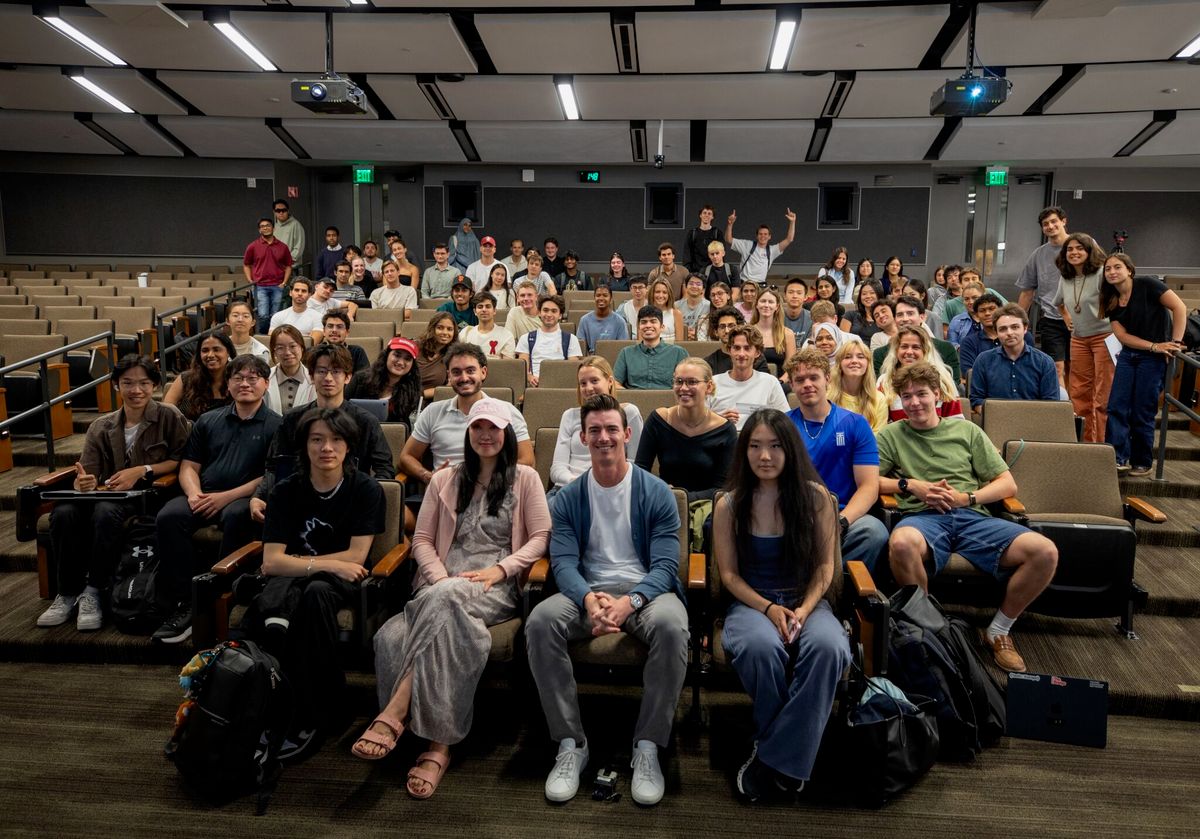
One of my favorite things about teaching with Rebeca Hwang at Stanford is how badly the students actually want to learn.
I'll admit: that was not me in college. During my brief time there, class mostly felt like something that got in the way of everything else I wanted to be doing.
Maybe that's why I find it so interesting that the content we're teaching today has almost nothing to do with what I traditionally thought you went to college to learn.
What We Teach
We're not teaching students how to code. We're not teaching them how to build AI models.
We're teaching them how to:
- Walk into a room where they know nobody and leave with 5 new relationships
- Ask questions people actually remember
- Tell their story in a way that makes people want to know more
- Build relationships without feeling transactional
- Create value for someone before asking for anything
- Engineer more "lucky" encounters into their lives
- Follow up in a way that turns a 5-minute conversation into a 10-year relationship
- Become the person people think of when an opportunity comes up
These have always been valuable skills. I think AI is about to make them exponentially more valuable.
The New Differentiator
When everyone has access to the same intelligence, intelligence becomes less of a differentiator.
The ability to build trust, create relationships, communicate an idea, inspire people, and make someone want to bet on you becomes the advantage. These are the human skills that make us irreplaceable in an era when machines can do everything else.
AI will keep getting better at the things we traditionally taught people to do. Which makes me increasingly convinced we need to spend a lot more time teaching the things that make us uniquely human.
The Takeaway
Watching a room full of Stanford students lean into that idea last week made me incredibly optimistic about the next generation. And slightly regretful that 18-year-old me spent considerably less time paying attention in class.
As AI continues to level the playing field on technical skills, the people who win will be the ones who can connect, inspire, and build real relationships. That's not a prediction. It's already happening.
Start investing in the skills that make you human. They're about to become your greatest career advantage.