

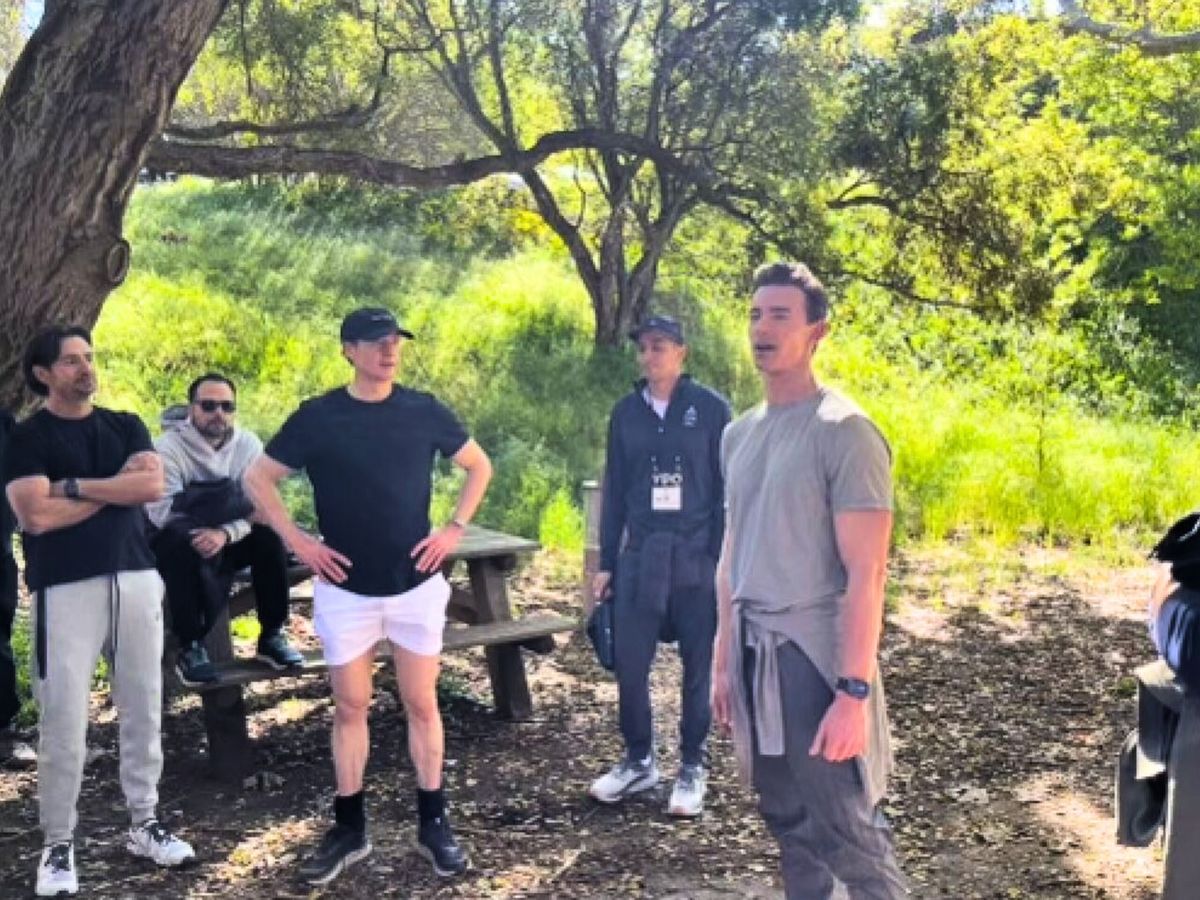
Had another opportunity to learn from Bryan Johnson during our YPO under 40 Summit in LA this past week.
A few takeaways:
Something he said that stuck with me was "My goal is to be respected by the 25th century." Very few people think more than 12 months ahead. I'm wondering what life and innovation would look like if more people thought this way.
His body is currently aging roughly 7 months for every 12 months of time. I assume this will keep going down. Could this theoretically double the human life span if done from a young age?
Continuous learning is central to the human skills I discuss in The Human Skills That Make Us Irreplaceable.
When asked what age he believes he will live until, Bryan replies "I'm guaranteed to die in the most ironic way possible."
Most people do everything they can to avoid negative press, Bryan thrives on it. He's found a way to convert it into an unstoppable energy.
Why This One Hit Different
I've sat in a lot of founder sessions. Most of them are about tactics. This one felt different because Bryan operates from a completely different time scale than anyone else I've encountered.
When he said "respected by the 25th century," the room went quiet. Not because it was a strange thing to say, but because it forced everyone to confront how short their own horizon was.
Most of us are optimizing for the next quarter, the next raise, the next product launch. Bryan is asking: what would I need to be doing right now to matter 800 years from now? That's not a question with a practical answer. It's a question that changes how you think.
The contrast is striking. The person next to you is worried about Q3. Bryan Johnson is worried about the 2200s.
What I'm Applying
I've started asking a simpler version of his question: would I be proud of this decision in 20 years?
Not 800. Just 20.
It's surprising how much that shifts the calculus. Short-term tradeoffs that feel necessary often look different against a longer backdrop. Deals that seem attractive today look costly when you project them forward.
And the things I tend to deprioritize — health, relationships, learning without an immediate ROI — look very different when you zoom out.
Bryan's framework is extreme. But it points at something real: the people who build things that last are almost always playing a longer game than everyone around them.